What is BBT; Basal body temperature; BBT for pregnancy; pregnancy support
If you’re trying to conceive, understanding your menstrual cycle is one of the most powerful tools you can have. While period trackers and ovulation apps offer helpful guesses, your basal body temperature (BBT) gives you real, personalized data about exactly what’s happening in your body each cycle.
Tracking BBT is a simple, affordable, and science-backed method for identifying ovulation, confirming your cycle phases, pinpointing your fertile window, and even recognising early signs of pregnancy. In this post, we’ll break down everything you need to know about BBT, how it works, and why it’s a game-changer for anyone on their fertility journey.
What Exactly Is Basal Body Temperature (BBT)?
Your basal body temperature is your lowest resting body temperature achieved during complete sleep. It is measured immediately after waking up, before you get out of bed, drink water, eat, or speak.
Unlike your daytime temperature, which fluctuates from activity, stress, food, and exercise, BBT remains stable overnight. This makes it an accurate biological marker of your hormonal cycle.
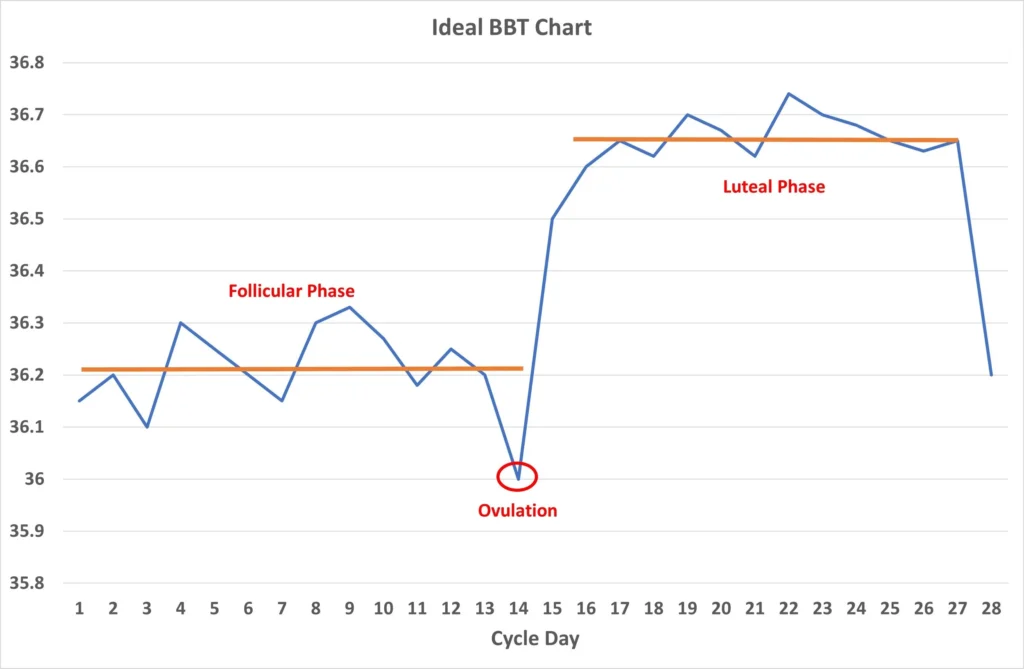
For people with regular menstrual cycles, BBT typically ranges from 97.0°F to 97.7°F (36.1°C to 36.5°C) in the first half of the cycle and rises to 97.8°F to 98.9°F (36.6°C to 37.1°C) after ovulation.
How BBT Reveals the Two Key Phases of Your Menstrual Cycle
Every menstrual cycle is split into two core phases, and your BBT graph will visually prove the transition between them. This is why tracking BBT lets you understand your unique cycle patterns better than any generic app prediction.
1. Follicular Phase (Pre-Ovulation: Lower BBT)
The follicular phase starts on the first day of your period and lasts until ovulation. During this stage, your body is maturing a follicle (and an egg) in preparation for conception.
Hormone status: Estrogen is dominant, and progesterone levels are low.
BBT pattern: Your temperatures stay consistently lower and stable. Minor day-to-day fluctuations are normal, but you will not see a sustained rise.
This phase varies greatly per person. Some have a 10-day follicular phase, others have a 16-day phase — generic cycle apps often miss this personal variation, but BBT tracking captures it perfectly.
2. Luteal Phase (Post-Ovulation: Higher BBT)
Ovulation triggers a dramatic hormonal shift. After the egg is released, the ruptured follicle turns into the corpus luteum, which produces progesterone.
Progesterone is a heat-inducing hormone — it directly raises your basal body temperature.
BBT pattern: You will see aclear, sustained temperature rise that stays elevated for the entire luteal phase.
A true ovulation rise is confirmed when 3 consecutive higher temperatures appear after your lower follicular phase readings. This tells you ovulation has already occurred.
The luteal phase is typically consistent for each individual (usually 12–14 days), which is one of the most reliable cycle metrics you can track.
Why BBT Tracking Is Essential for Pregnancy & Fertility
1. It Confirms Ovulation Actually Happened
Apps predict ovulation based on averages. BBT confirms ovulation. Many people experience delayed ovulation, anovulatory cycles (no ovulation), or irregular ovulation that apps fail to detect. Your BBT chart never lies.
2. It Pinpoints Your True Fertile Window
Your fertile window occurs before the BBT rise. Sperm can live 3–5 days in the body, so timing intercourse in the low-temperature follicular phase maximizes your chances of conception. Once your temperature rises, ovulation is already over for that cycle.
3. It Identifies Early Pregnancy Signs
In a normal non-pregnant cycle, your BBT will drop sharply 1–2 days before your period arrives, signaling the end of the luteal phase.
The early pregnancy BBT pattern: Your high luteal phase temperatures stay elevated beyond your expected period date. A sustained high BBT for 18+ days post-ovulation is a very strong early indicator of pregnancy, often before a test can detect hCG.
4. It Helps Diagnose Cycle Irregularities
Consistent BBT tracking can reveal common fertility issues, including short luteal phases, delayed ovulation, PCOS-related cycle irregularities, or hormonal imbalances — helping you and your provider tailor your fertility plan.
How to Track BBT Correctly (For Accurate Results)
Inconsistent tracking leads to confusing charts. Follow these simple rules for reliable data:
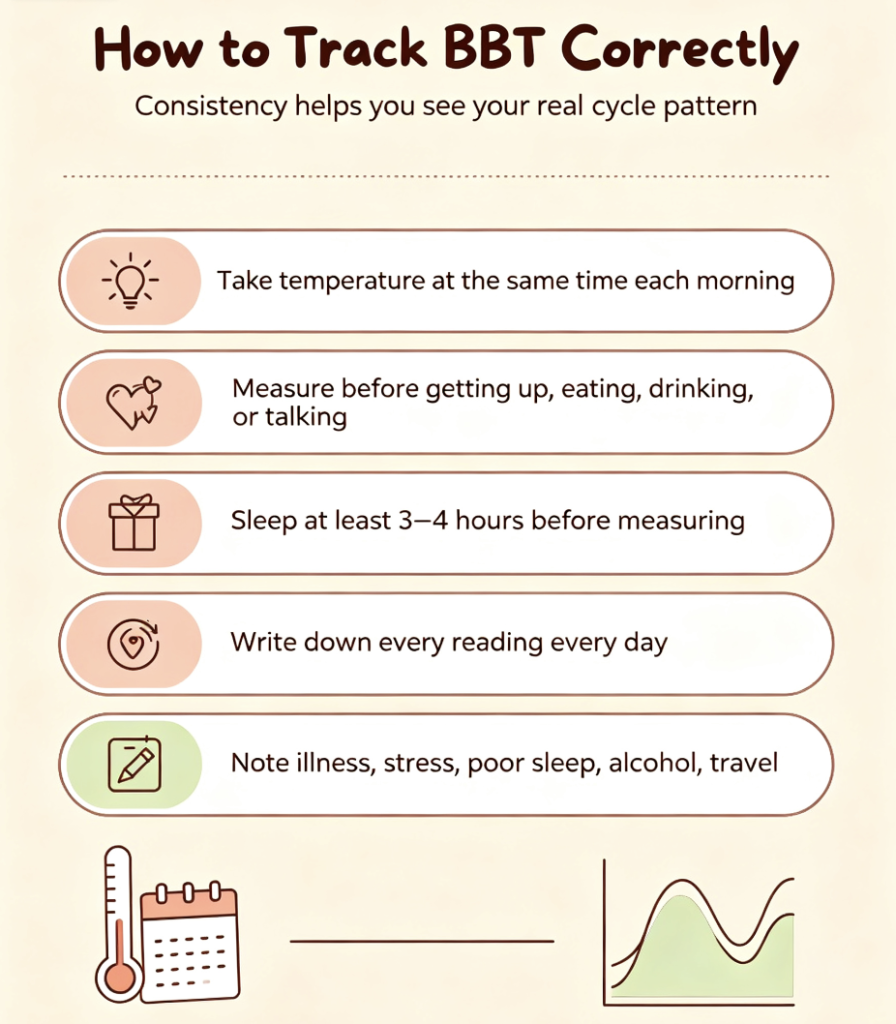
- Take your temperature at the exact same time every morning
- Measure before any movement, eating, drinking, or talking – muscle movement will impact on temperature changes
- Sleep a minimum of 3–4 hours straight before measuring
- Log every reading daily, even if temperatures feel “off”
- Note variables: illness, stress, poor sleep, alcohol, or travel (these can temporarily raise BBT)
Common BBT Myths to Avoid
Myth 1: You can only get pregnant on the day of ovulation. Truth: The fertile window spans 5 days before ovulation. BBT tracking helps you hit this window perfectly.
Myth 2: A temperature spike means you’re ovulating that day. Truth: The spike happens after ovulation, confirming the event has passed.
Myth 3: BBT tracking is old-fashioned and useless. Truth: It’s the only free, biological method to verify your unique cycle rhythm, far more accurate than algorithm-based app predictions.
Final Thoughts
Your BBT is a direct reflection of your hormonal health and cycle activity. By tracking it daily, you move from guessing about your fertility to understanding your body’s exact rhythm.
Whether you have regular cycles, irregular cycles, or are actively trying to conceive, BBT tracking empowers you to recognize your fertile window, confirm ovulation, spot early pregnancy cues, and identify cycle patterns that impact your fertility journey.
Quick Takeaway
Low, steady BBT = follicular phase & fertile window
Sustained high BBT = post-ovulation luteal phase
Prolonged high BBT = potential early pregnancy
Contact us:
phone number: 021 2159963
email address: ponsonbywellness@gmail.com
57 Sussex St,
Ponsonby
Auckland 1021